AV as a Service (AVaaS) has been a hot topic in the industry for some time now, but do we really understand what it is and what it means?
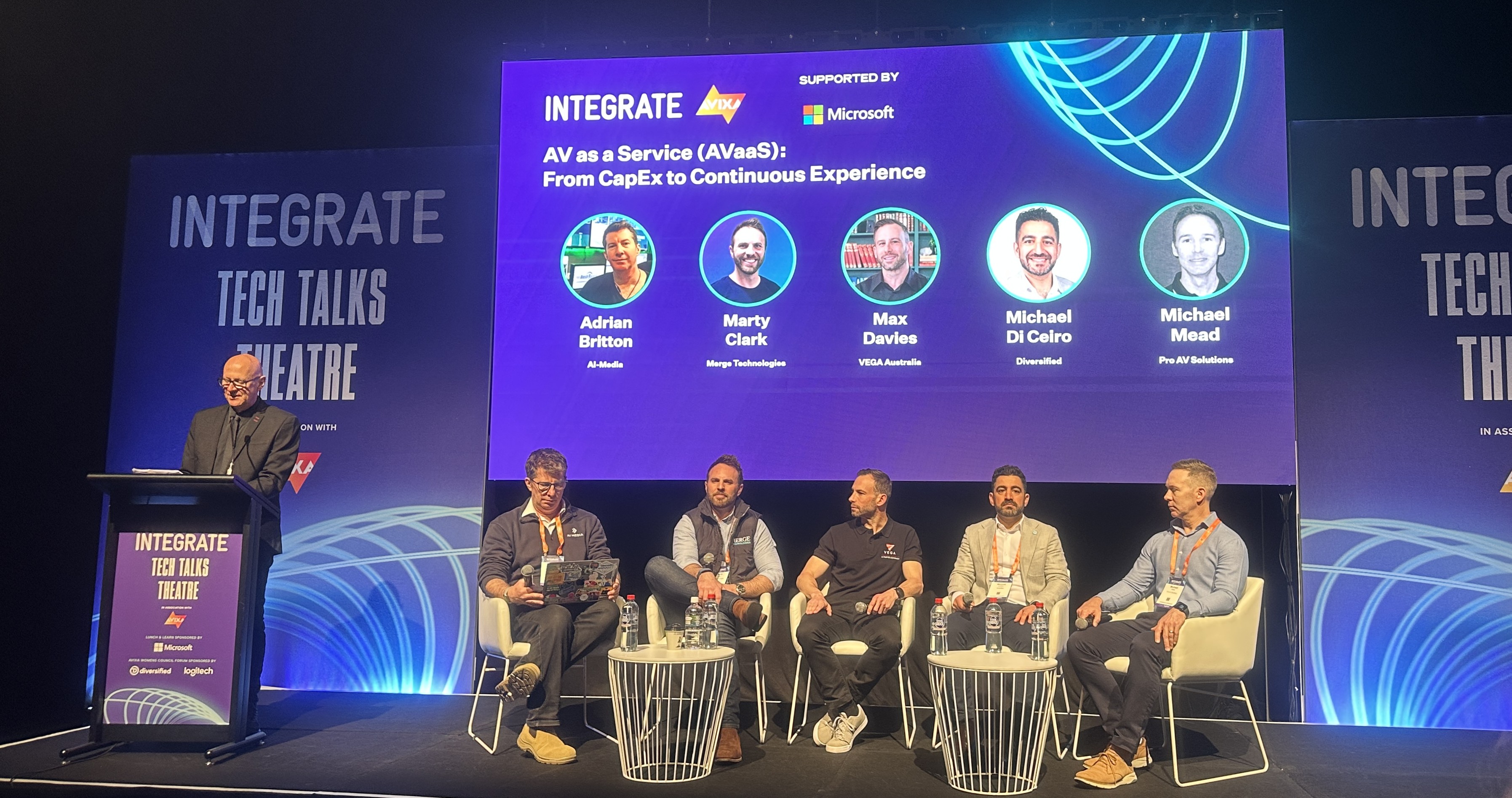
Recently at the Integrate Expo 2026 AV professionals from different facets of their respective businesses, including our very own Founder and Managing Director Marty Clark, came together to unpack and interrogate AVaaS.

The session moved past the marketing language and asked the harder question: what does AVaaS actually change?
It's the same conversation we've been having internally while building out MergeSPACES™, so it was a useful room to be in.
Beyond the box: outcomes over hardware
The panel's starting point was blunt, AVaaS isn't just a new way to sell the same boardroom kit. It's a shift in the relationship between the provider and the client. Effectively tying procurement and implementation to ongoing performance drives better outcomes over a longer term.
Under a traditional model, the relationship often begins to diminish beyond handover. Under AVaaS, it continues to grow. Uptime, performance, and user experience become the ongoing product, not the screens and DSPs sitting behind the wall.
Panellists shared real-world use cases where this shift showed up in practical ways: proactive monitoring catching issues before end users noticed them, faster resolution times because the provider was financially motivated to keep systems running, and the lifecycle management leading to more predictable and smoother cashflow.
The CapEx-to-OpEx conversation
The commercial pitch for AVaaS is straightforward on paper: move technology spend off the balance sheet, spread cost predictably, and stop budgeting for AV in five-year capital cycles that never quite match how fast the technology actually moves. The panel didn't disagree with any of that.
Where it got interesting was in the operational fine print, SLAs, what's actually included in “managed,” who owns the risk when a vendor's hardware component fails versus a services issue, and how organisations should structure procurement so they're buying a genuine service outcome rather than a lease with better branding.
Which brings us to the part of the panel that generated the most cross-talk.
“It's not a finance arrangement” – except, kind of, it is
Some panellists were quick to draw a line: AVaaS is not finance. It's a service model. To be fair, much of the value sits in the ongoing management, support, and performance guarantee.
But sit with the mechanics for a second. Capital equipment, delivered up front, paid for over a term, bundled with a monthly fee - that's functionally a finance arrangement with a service wrapper around it. It became the session's quiet flashpoint.
Our view, and the one Marty pushed on the panel: AVaaS is what it is because of the financing component, and there's nothing wrong with saying so. It is a financing mechanism, that's the part that gets the CFO's sign-off. What actually separates a genuine AVaaS provider from a leasing company with a service department bolted on is how the solution is brought together. A single agreement tying financing and servicing together, lifecycle management, flexibility for moves, adds and changes, and complete supplier accountability.
Pretending it isn't finance at all is what erodes trust with the people approving the budget, owning it is what builds it.
When AVaaS works, and when it doesn't
The panel was refreshingly candid that AVaaS isn't the right model for everyone. It tends to work best for organisations with multi-site or scaling AV estates, where consistency and centralised management matter more than any single install; environments where technology refresh cycles are frequent and unpredictable budgeting is a genuine pain point; and businesses that want AV performance treated as an operational KPI, not an IT afterthought.
It works less well where requirements are static, budgets are genuinely capital-preferenced, or where “managed” ends up meaning very little beyond a support line.
Where it's heading
The consensus on the future was less about the model itself and more about maturity, SLAs becoming more standardised across the industry, clearer language separating genuine AVaaS from relabelled leasing.
It's the same standard we hold MergeSPACES™ to. If you're weighing up whether an AVaaS model fits your organisation, get in touch below - we're happy to talk through where it works, where it doesn't, and what “as a Service” actually means.
Last updated: 18/09/2026
Grace Tran - Marketing & Communications Manager

.png)