Meeting room upgrades are often expected to solve long-standing collaboration issues - yet many fail to deliver meaningful improvement. Despite new technology being installed, users remain frustrated, and rooms go underutilised. Understanding why meeting room upgrades fail is the first step toward getting them right.
So why do meeting room upgrades fail, and what can be done differently?
The most common reasons meeting room upgrades fail
Focusing on technology instead of experience
One of the biggest mistakes organisations make is treating meeting room upgrades as a hardware exercise. A new camera or microphone won’t automatically improve meetings if the overall experience remains inconsistent or difficult to use.
Successful upgrades start by understanding how people actually meet - not just what technology is available.
Do you know which mic is best for your set up? Check out our article here for some tips.
Ignoring the physical environment
Room acoustics, layout, lighting, and furniture placement play a major role in meeting quality. Even the most advanced collaboration technology can underperform if it’s placed in a room that hasn’t been designed with sound and visibility in mind.
Technology will only get you so far in an acoustically challenging space, so we conduct acoustic assessments when retrofitting new systems and address any issues in line with the technology uplift, usually by installing architecturally appropriate acoustic treatment in a way that reduces the 'liveliness' of the space. Doing so allows us to guarantee great experiences both in the room and on the far end.
Choosing solutions that don’t scale
What works well in a single boardroom often doesn’t translate across multiple spaces. When organisations deploy different systems in every room, users are forced to relearn how to start and run meetings each time.
This lack of consistency leads to frustration, lower adoption, and increased support requests.
Treating upgrades as a one-time project
Meeting rooms are often upgraded as standalone projects rather than part of an ongoing lifecycle. Without regular updates, monitoring, and support, even well-designed rooms can quickly fall behind changing workplace needs.
How HP helps organisations avoid these pitfalls
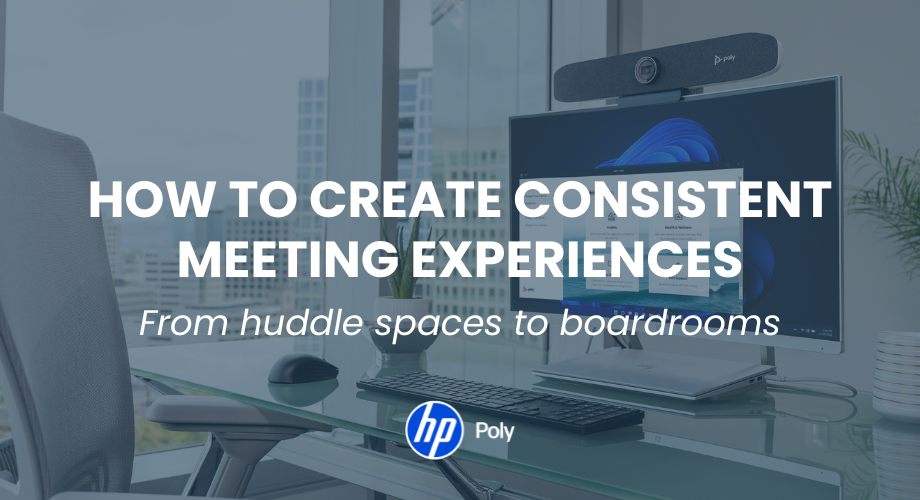
Rather than approaching meeting room upgrades as a collection of devices, HP | Poly focuses on creating reliable, user-first collaboration experiences that work across different spaces and use cases.
Designed for how people actually meet
HP | Poly solutions are built around real meeting behaviours, conversations, presentations, hybrid discussions - not just technical specifications. Features like intelligent camera framing and advanced audio pickup help meetings feel more natural for both in-room and remote participants.
Consistency across room types
From small huddle spaces to large boardrooms, HP | Poly enables a familiar and predictable experience. Users know what to expect when they walk into a room, reducing friction and improving adoption without the need for constant training.
Built with IT teams in mind
Meeting room upgrades often fail when IT teams are left managing complex, fragmented systems. HP | Poly solutions are designed for easier management, ongoing updates, and long-term reliability - helping IT teams maintain performance beyond the initial install.
Supporting long-term meeting room success
Rather than treating upgrades as one-off investments, HP | Poly supports a lifecycle approach. Regular firmware updates, platform compatibility, and scalable deployment help meeting rooms remain effective as collaboration needs evolve.
Getting meeting room upgrades right the first time
The most successful meeting room upgrades share a few common traits:
- A clear focus on user experience
- Technology that works consistently across spaces
- Consideration of both physical design and digital capability
- Solutions that can evolve over time
When these elements come together, meeting rooms don’t just function - they’re trusted, used, and valued.
Meeting room upgrades fail when technology is treated as the solution rather than part of a broader collaboration strategy. By focusing on experience, consistency, and long-term performance, organisations can avoid common pitfalls and create meeting spaces that truly support modern work, with HP helping enable that success.
Are you planning a meeting room refresh or reviewing collaboration standards? We'd love to hear from you! Reach out to us today to discuss your needs.
Last updated: 25/02/2026
Grace Tran - Marketing & Communications Manager