Every office move follows roughly the same order of operations. Find the space. Appoint a tenant advocate. Negotiate the lease. Brief a designer. Fit out. Move in.
Somewhere in there, (usually right near the end), someone remembers the meeting rooms need screens and asks who's doing the AV.
That's the wrong order. Not because AV is more important than the lease, but because it's the one line item that touches everything else. Cabling paths depend on the fit-out. Room sizing depends on how the space gets used, which depends on what technology's going init. Budget depends on decisions that, by the time AV gets a seat at the table, have usually already been made.
If you're actively looking for space, this is the moment to change that order.
Download your own Workplace Move Readiness Checklist here.
Not moving offices? We've put together a Technology Refresh Checklist here.
The retrofit tax
Here's the pattern we see constantly: a company signs a lease, appoints an advocate, briefs an interior designer, and gets a beautiful fit-out concept, floor plan, finishes, furniture, the lot. AV shows up in week eight as a line item to "sort out," usually because someone in facilities finally asked.
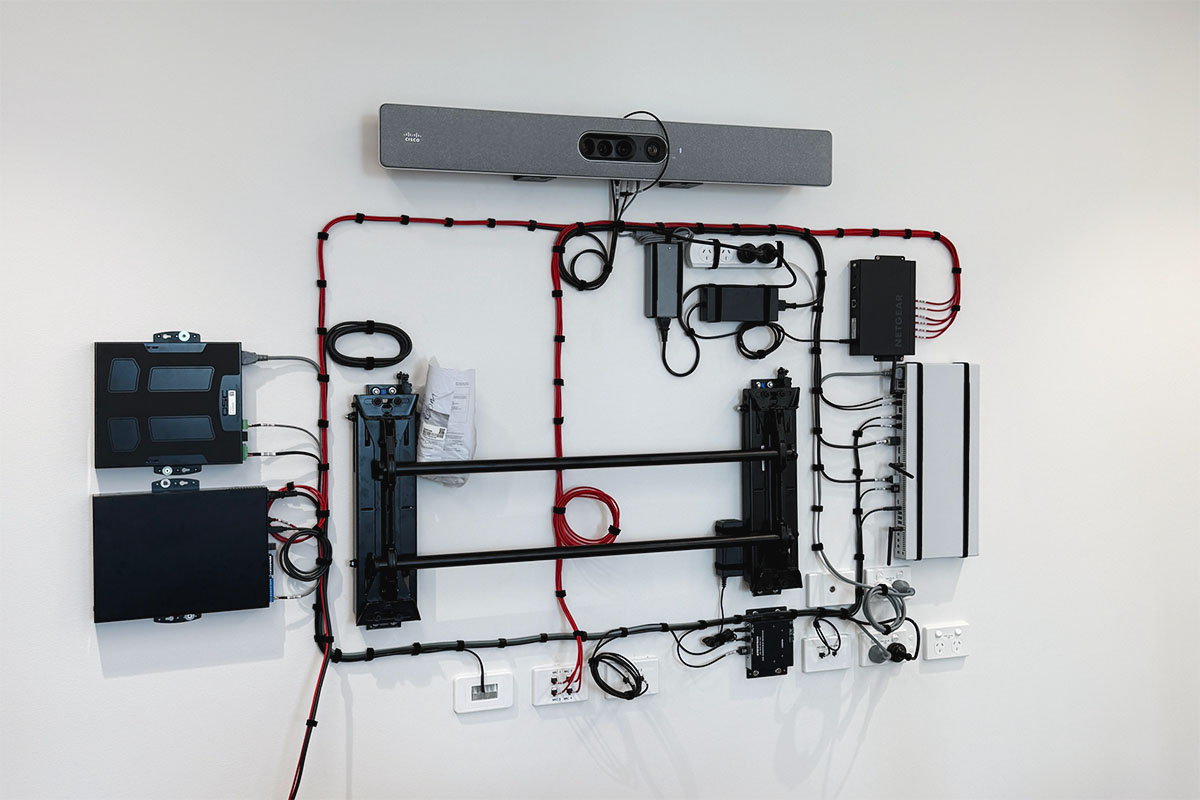
At that point, every AV decision is now a compromise. Cable trays that should've been specified in the ceiling grid have to be surface-mounted. Room layouts designed for headcount, not for how video calls actually work in that space, get retrofitted with awkward camera angles. The budget that seemed generous for "screens and speakers" turns out to be about 40% of what's actually needed, because nobody scoped it properly at the start.
None of this is anyone's fault exactly, it's just what happens when AV isn't in the room for the decisions that shape it.
What "early" actually means
Early doesn't mean you need a fully spec’d AV system before you've even chosen a building. It means:
1. Before the advocate is appointed, have a rough sense of what your technology needs actually are - meeting room count, video conferencing standard, digital signage, whatever's relevant to how your team works.
2. Before the design brief goes out: technology requirements are in that brief, not added as a variation after concept sign-off.
3. Before the budget is locked: AV has its own line, sized properly, not squeezed out of contingency.
That last point is easier when the AV itself isn't a single upfront capex decision. Under our MergeSPACES™ AVaaS model, the technology scales with the space rather than needing to be fully committed to before the floor plan's even settled, which matters most exactly at this early, still-fluid stage of a move.
Where to start
If you're currently looking at space, actively searching, broker engaged, shortlist forming – this is the point to start the AV conversation, not the point after you've signed.
It costs nothing to have the conversation early. It costs a lot to have it late.
We've put together a Workplace Move Readiness Checklist that lays out exactly what to have sorted, and when, across the whole move - technology included. Worth a look before your next site visit.
Not moving offices? We've put together a Technology Refresh Checklist here.
Last updated: 23/10/2026
Grace Tran - Marketing & Communications Manager